Puppy and Training Basics
Ten Basic Training Commands
Teach sit, stay, come, heel and settle with short positive sessions, clear cues and rewards, plus fixes for jumping, pulling and poor recall outdoors.
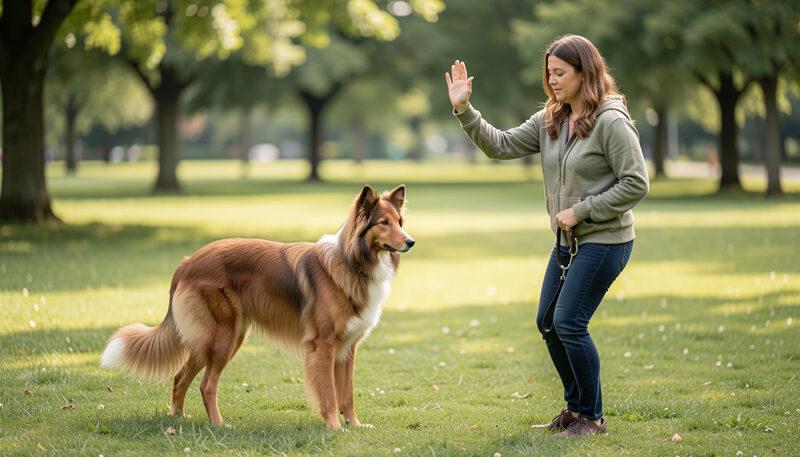
You learn ten basic cues you can use every day, how to teach each one with words, hand signals and calm repetition, and which common mistakes slow progress. The American Kennel Club frames the goal in simple terms. The key to a good dog is a well-trained dog, and training together builds an unspoken language between you and your dog.
In an Australian home that language has to work on the verandah, at the front gate, on the footpath and at the beach car park. This guide stays close to that idea. It groups the ten cues into short sessions you can fit around work and family life, with plain steps, simple rewards and clear limits. The AKC training page does not publish session lengths or repetition counts.
What does a well-trained dog look like at home?
A well-trained dog is not a robot. It is a dog that can sit when visitors arrive, wait at an open door, come back when called in the yard and settle on a mat while you eat. That calm behaviour comes from repeated practice in small moments, not from one long lesson on the weekend. If you live with a busy young dog, start inside where there is less noise, then move the same cue to the hallway, the garden and the street. Keep your voice even, keep your movements clear, and give the dog time to think. Training together builds trust because the dog learns what each word predicts.
How do words, hands and whistles build understanding?
When you train together, an unspoken language builds through words, hand signals, whistles and other methods. Choose one short word for each cue and keep it. Pair it with one hand signal you can repeat exactly. Some owners add a whistle for recall in larger yards, which suits active breeds such as the Kelpie that work at a distance. Say the word once, show the signal, then reward the response. If you repeat the word three or four times, the dog learns to wait for the fourth repeat. If you change the signal each time, the dog has to guess. Stillness helps. Stand upright, lower your hand the same way, and let the dog offer the behaviour.
Sit and down without a wrestle
'Sit' and 'down' settle the dog before meals, before crossing a road and before greeting people. For 'sit', hold a small food reward near the nose, move it slowly up and back over the head, and mark and reward the moment the hindquarters touch the ground. For 'down', start from a sit, move the reward down toward the ground between the front paws, then a little forward, and reward the elbows resting on the floor. Common mistakes include pushing on the back, luring too fast, and training on a slippery floor where the dog feels unsafe. If the dog jumps or backs away, reset calmly and try a smaller hand movement. Short, easy wins teach more than pressure.
Stay and wait at doors and gates
'Stay' and 'wait' look similar, but they are used in different places. Many owners use 'stay' for a longer hold in one spot and 'wait' for a brief pause at doors, gates and car boots. Ask for a sit or down first, show a flat palm, say the word once, take one step back, return and reward the hold. Build distance and distraction slowly. The common mistake is calling a dog out of a stay and then punishing a slow return, which makes the next stay weaker. Another mistake is only practising in the kitchen. Try the laundry door, the front gate and the path to the clothesline, where real life needs the cue. Calm release words help the dog learn when the hold ends.
Come when called in a real yard
'Come' matters most when the dog is free and something interesting moves, such as a bird, a ball or another dog. Start on lead at a short distance, crouch slightly, say the word in a warm tone and guide the dog toward you, then reward with food and brief praise. Practise in the yard before you try a park. Do not chase the dog if it runs off, and do not call 'come' to cut play short and then leave at once, because the dog will link the word to the end of fun. Owners who follow a steady puppy routine from toilet breaks to lead walks often find recall improves faster, since the pup already expects clear patterns through the day. Always make returning the easy and pleasant choice.
How do you keep a loose lead past distractions?
Heel or loose lead walking means the dog stays near your leg without pulling. Walk at a normal pace, keep the lead soft, reward the dog for staying beside you, and change direction calmly if the lead tightens. Stop and wait when pulling starts, then move again when the lead softens. Common mistakes include yanking the lead, wrapping it tight around the hand, and walking too far too soon past other dogs and food scraps. Train first on a quiet street, then near a busier corner. A short sniff break given as a reward can help a young dog stay focused. The aim is a relaxed shoulder on the lead, not a perfect line.
Leave it and drop it for safety
'Leave it' means do not touch, and 'drop it' means release what is already in the mouth. Both help around food scraps, rubbish, sticks and beach finds. For 'leave it', cover a low-value item with your hand, reward the dog for turning away, then practise with items on the ground on lead. For 'drop it', trade for a reward rather than pulling the object out, and praise the release. Never chase a dog with food in its mouth around the house, since a chase turns keeping it into a game. This pair also supports safer outings for dogs that mouth shells or bait, a habit beach owners meet when they read about taking a dog to the beach without trouble. Practise with calm trades builds a fast, willing drop.
Go to your bed and settle on the verandah
'Go to your bed' gives an excited dog a clear place to rest while people eat, work or open the front door. Put the bed in a quiet corner, point to it, reward any step toward it, then reward lying down and resting the head. Add the words only when the dog goes there readily. 'Watch me', the tenth cue, fits here too. Say the name or 'watch', reward brief eye contact, then release. Use both cues to manage visitors, tradespeople and mealtimes. The common mistake is sending the dog to bed only after barking starts, which links the bed to frustration. Send the dog early, reward quiet settling, and keep the bed as a pleasant spot, never as a place of isolation.
Proving the ten cues in real life without pressure
Test your training skills in small checks that feel like daily life. Ask for a 'sit' at the gate, a 'wait' before stepping outside, a short 'stay' while you carry washing, and a 'come' from one side of the yard to the other. Change rooms, change leads, and ask a family member to give one cue so the dog learns to listen to more than one voice. The American Kennel Club invites owners to improve dog training skills through its training programs, where experts answer common training questions and provide tips to test progress. Visit the AKC training programs when you want structured ideas beyond home practice. Note what holds and what fades, then practise the weak spot for a few days.
Pick one cue that would change your week most, such as 'wait' at the front door or loose lead on your street. Use the same word and the same signal for seven days, reward each clean response, and write down where it works and where it breaks. Then add the next cue.