Puppy and Training Basics
Puppy Training Basics
Start with toilet timing, crate setup and night settling, then add social time, basic cues, loose lead walking and calm greetings for new puppies.
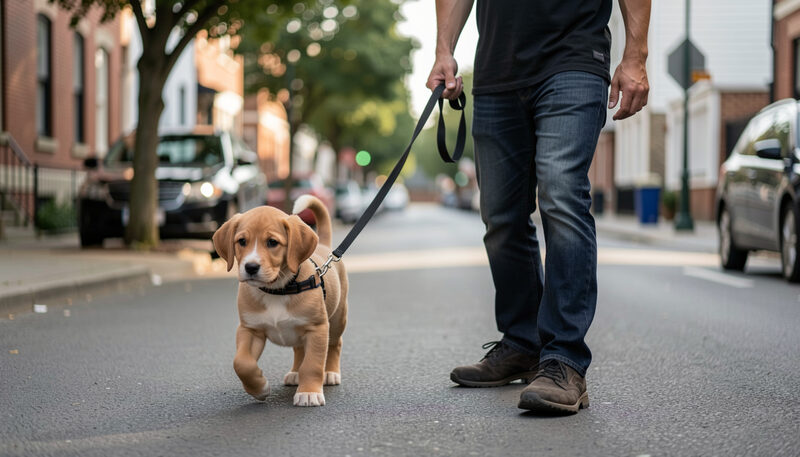
A young puppy in an Australian home learns fast, and the first weeks set the pattern for everything that follows. You will teach toilet habits, rest habits, people skills, simple cues, and lead manners side by side. The key to a good dog is a well-trained dog, and training together builds a quiet understanding between you and your puppy.
What training gives a family dog
You live closely with your dog. You share rooms, yards, cars, footpaths, and visits. When your dog can settle, come, wait, and walk without pulling, daily life runs with less friction. The American Kennel Club page frames this in simple terms. A well-trained dog makes a good dog, not because of tricks, but because you and the dog can predict each other. Your job in the puppy months is to make that predictability normal. You ask the same way each time. You reward the same calm response each time. Your puppy starts to match you.
How words and signals turn into language
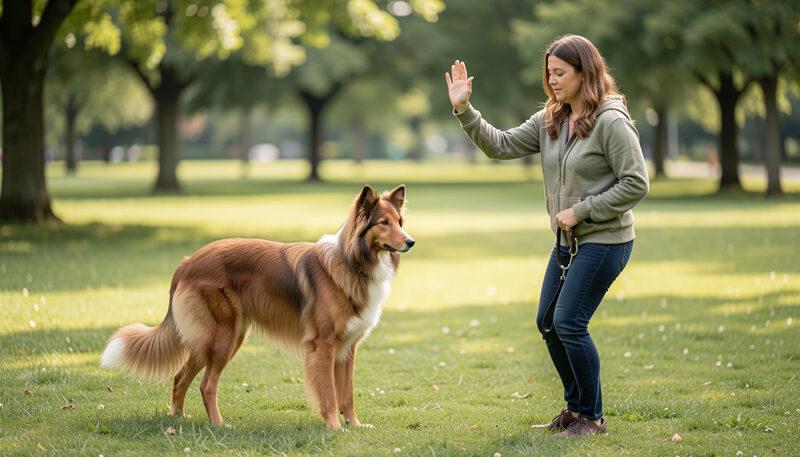
When you train together, an unspoken language builds between you through words, hand signals, whistles, and other methods. You say a word. You move your hand the same way. You keep your body still while your puppy thinks. Over many short repeats, your puppy links the sound and the movement to one action. You do not need a loud voice or long speeches. You need consistency. Use one word for one job. Pair it with one clear hand shape. Keep sessions short and close, in a place with few distractions, then use the same word and signal in more places as your puppy succeeds.
Toilet foundations start with routine
Toilet training is mostly about timing and place. You take your puppy out after sleep, after play, after food, and after excitement, and you go to the same door and the same patch of grass. You wait. You stay calm while your puppy sniffs and circles. When your puppy goes in the right spot, you mark it with quiet praise and you let your puppy know that spot works. Inside, you watch for signs that your puppy needs to go and you move quickly to the door. For a simple daily routine you can follow at home, see How to Toilet Train a Puppy With a Simple Schedule. Accidents are part of the process. You clean them without fuss and you keep the routine steady the next day.
Crate foundations start with rest
A crate works when your puppy reads it as a bed, not as a lockup. You set it in a lived-in corner, with bedding and a chew toy, and you let your puppy walk in and out freely while you are nearby. You feed meals near it. You close the door for short rests while you stay in the room, then open it before your puppy gets restless. At night you keep the pattern the same. Toilet break, dim light, crate, sleep. If your puppy whines, you wait for a pause, then you take your puppy out calmly to the toilet spot and return to rest. You build duration in small steps. The American Kennel Club page does not publish feeding amounts, ages, or timetables.
How does socialization stay calm and safe?
Socialization means your puppy meets the normal sights and sounds of Australian life and learns to stay relaxed. You introduce traffic noise, bins, umbrellas, hats, kids on scooters, other dogs at a distance, and visitors at the door. You keep each meeting short. You let your puppy watch first, then approach, then move away while the experience is still easy. You pair new things with food and play so novelty predicts good outcomes. You can test your training skills there with short lessons that show how timing and distance shape behavior. You keep control of space so your puppy does not need to cope with crowding or rough play before your puppy is ready.
Cue foundations stay small at first
Cues work when they are short, separate, and repeated in the same way. You teach sit, down, come, stay, and leave it as separate skills. You lure once, then you fade the lure and keep the word and the hand signal. You ask once and you wait. When your puppy answers, you reward with food or a brief game, then you reset. You practice in the kitchen, then in the yard, then on a quiet street, so the cue holds in new places. A simple set to start with is described in Ten Basic Dog Training Commands Owners Can Teach. Use one cue at a time. You stop while your puppy still wants more, and you return later for another short round.
Lead foundations start inside the skill
Lead walking starts before the footpath. You fit a flat collar or harness so you can slide two fingers under it, and you let your puppy wear it during play and meals. You clip the lead on indoors and you follow your puppy, then you redirect your puppy's attention back to you with food. Outside, you walk in a quiet area and you pay for position near your leg. When the lead goes tight, you stop, you wait for slack, then you move again toward something your puppy wants to see. Your puppy learns that a loose lead lets the walk continue. You turn often. You keep the pace slow. You end the walk before your puppy tires and starts to bite the lead or jump.
How do you keep training fair?
Fair training has three parts. You make the task clear, you make the right answer easy, and you pay it every time at first. You train when your puppy is awake but not wild, after a toilet break and a short play. You work for two or three minutes, then you rest. You use small soft treats that your puppy can eat quickly, and you mix in rest and touch as rewards. If your puppy fails twice, you make the task easier instead of repeating the same difficult request. You move closer. You lower distraction. You ask for a shorter stay. Your puppy stays willing because success stays frequent.
Where do training programs fit in?
Training at home takes you far, and a structured program can check your timing and your handling. The American Kennel Club page points readers to training programs and invites owners to test training skills. You bring your words, hand signals, whistles, and other methods to class the way you use them at home, and the instructor watches the link between what you ask and what your puppy does. You learn how to raise distraction in steps, how to keep cues clean when other dogs move nearby, and how to practice between sessions without drilling. Pick one cue this week, use one word and one signal for it, and run five short sessions in three different rooms.
Puppy and Training Basics
Ten Basic Training Commands
Teach sit, stay, come, heel and settle with short positive sessions, clear cues and rewards, plus fixes for jumping, pulling and poor recall outdoors.
Sit, stay, come, down and six more, in an order that works.
Puppy and Training Basics
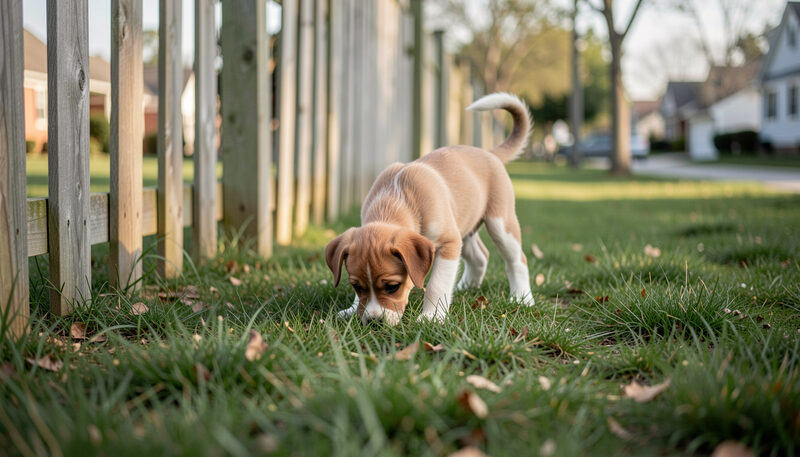
Toilet Training a Puppy
Follow a steady toilet routine for puppies with timing, crate use and night breaks, and learn how to clean accidents and shape calm outdoor habits.
A schedule, a spot, and praise at the right second.
Puppy and Training Basics
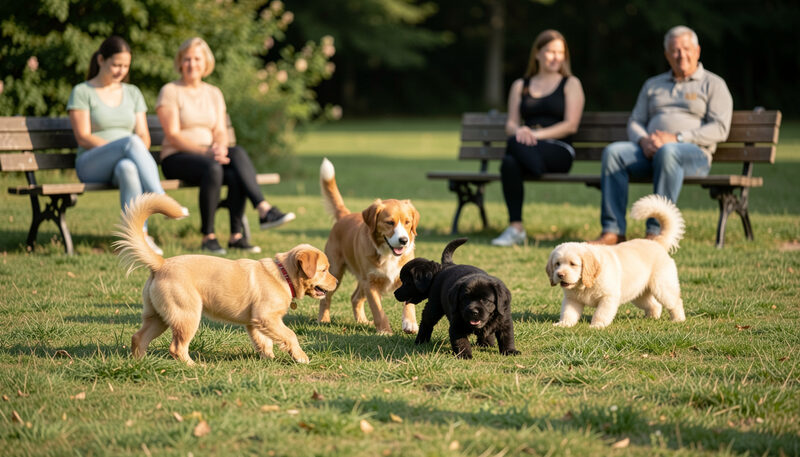
Are Dog Parks Good for Dogs
Decide if dog parks suit your dog by reading body language and play styles, and manage greetings, high arousal, resource guarding and safe exits.
Good for some dogs, wrong for others: how to judge.